Friday, 21 June 2019

The Lees and beyond

Sunny spells, 19°, light W.

A walk out to the Lees and beyond today and a little warmer than of late.

The “long ditch” out beyond the Lees was dredged over the winter and subsequently all the growth in and around the ditch was either disrupted or destroyed.

There are no birds breeding along the ditch this year and it seems the Reed Buntings that bred along the ditch have moved out into the crop fields (5 singing males). A lot of the Bullrush, Reed and other plants that were in the ditch have been destroyed but some of the plants on the bank have survived. Any larvae or other life that was in the ditch has also been partially destroyed.

However nature has a way of coming back!

Several Dragonfly species seen along the ditch and a few small fish present (probably Stickleback) and a few Orchid species along the bank.

The “Reedy ditch” at the far end had 5 singing Sedge Warbler and 3 singing Reed Warbler (plus others present) present along with several Reed Bunting and Yellowhammer.

A family group of Swallow spent time feeding over the area (2 adults & 5 young) and a few Swift overhead and a distant Grey Heron.

From Alan: 2 Common Tern again on the river and Lesser Whitethroat

Mammals: Brown Hare.

Dragonflies: Banded Demoiselle, Large Red Damselfly, Azure Damselfly, Common Blue Damselfly, 4-spot Chaser and Emperor Dragonfly. Per Alan: Brown Hawker and White-legged Damselfly.

Butterflies: Large Skipper, Large White, Red Admiral, Small Tortoiseshell, Speckled Wood, Marbled White and Meadow Brown. Per Alan: Small Heath, Meadow Brown, Common Blue, Marbled White, Small Copper and Large Skipper.

Moths: Cinnabar Moth and Scarlet Tiger. Per Alan: Burnet Companion.

Insects: Black and Yellow Long Horn Beetle. Per Alan.

Orchids: Pyramid Orchid, Common Spotted Orchid and Poss Marsh Orchid hybrid.

Reed Warbler
Emperor Dragonfly
Burnet Companion
 Common Spotted Orchid
 Scarlet Tiger
 Small Tortoiseshell
 Large Skipper
 4-spot Chaser
 Azure Damselfly


Game of Crows and poor info!

Out walking today along the farm track to the Lees I was asked by a dog walker if I was a “twitcher”. I replied no, not these days and explained what a twitcher was. (The media incorrectly labels all bird watchers or birders as twitchers).

She then went on about the “Crows” that live near the “Old people’s home” (again I explained to her, “it’s not and old folks home”).

And she then proceeded to tell me that the “Crows” had killed a Red Kite (Highly unlikely) and had taken all the eggs (possible if nest was deserted even by another Kite).

She then stated that they are damaging cars by stripping the rubber seals etc. (again very unlikely) and she was going to get a 6 bore to shoot them (Illegal and a license required at least for the weapon).

When I asked how many “Crows” there were she replied “around 30”.

I then explained that the “Crows” around here would not form flocks that large and they were more likely to be Rooks or Jackdaws that use the Rookery near Church road.

I also said that the Rooks and Jackdaws are now roaming into areas that the Crows had dominance over and since their demise (due to someone catching and killing them) it has led to an imbalance. The Rooks and Jackdaws normally fed away from the village on farmland but are now more active in gardens and areas close to the village as are Magpies and Jays.

There are consequences of messing with the balance!

People make” knee jerk” reactions to situations they do not understand and screw it up even more. I would like to see any evidence to support “the Crows” killing a Red Kite and “Crows” stripping rubber off cars! And as for shooting them………my reply would be unprintable!

Thursday, 20 June 2019

Summer doldrums

Mainly cloudy with a few sunny periods, 17°, fresh WSW.

Still fairly static out there today. Quite a few species seen carrying food today so quite a few active nests around.

2 Little Owl heard calling to each other as a Buzzard flew low overhead.

A light movement of Swift today with c100 flying south over a period of a couple of hours and a Kestrel hunting around the hill.

Dragonflies: a couple of Azure Damselfly.

Butterflies: very few out on the farmland with 1 Large White, 3 Meadow Brown and 2 Speckled Wood.

Yellowhammer
Reed Bunting
 Dunnock
Song Thrush

Tuesday, 18 June 2019

More rain!

Overcast then rain, 17°, light SW.

Pretty quiet out today. A quick check on the Spotted Flycatchers before making my way out to Lollingdon.

A few Swift feeding around the hill and 3 Mistle Thrush present.

Chiffchaff, Yellowhammer and Corn Bunting still singing well, other species not so frequent.

Little Owl and Grey Heron nearby and another Grey Heron in the meadow this afternoon.

Mammals: Stoat carrying small prey.

Butterflies: a few each of Speckled Wood and Meadow Brown. Yesterday Marbled White, Large Skipper and Small Skipper (per Alan Dawson and Tony Rayner).

Moths: Cinnabar Moth, and a Garden Tiger recently (per Ed Munday).

Marbled White (Alan Dawson)
Scarlet Tiger (Ed Munday)
Grey Heron

Sunday, 16 June 2019

Marsh Fritillary

A Marsh Fritillary butterfly found today by Alan Dawson is a first record in recent times for this rare butterfly.

I am unable to find any documented records for this species in the Cholsey area but could well have been around early last century.

Adults feed on nectar primarily on Betony, Bugle, Buttercups, Cuckooflower, Dandelion, Hawkweeds, Knapweeds, Ragged Robin, Thistles and Tormentil.

Its caterpillar food plant is Devil’s-bit Scabious (also Field Scabious and Small Scabious) and habitats have been destroyed or fragmented over years and this has led to its disappearance from many former habitats.

Is this a wanderer, a release or a bona fide resident? Food plant will be looked for!

Update: Alan Dawson found no Devil's-bit Scabious around the site where this butterfly was found and as it is a female and less likely to wander it has been concluded that this was probably a release!

 Marsh Fritillary (courtesy Alan Dawson)

Week end pics

some good wildlife pics from Cholsey this week end. Thanks to Niall, Cathy and Alan for their photos.

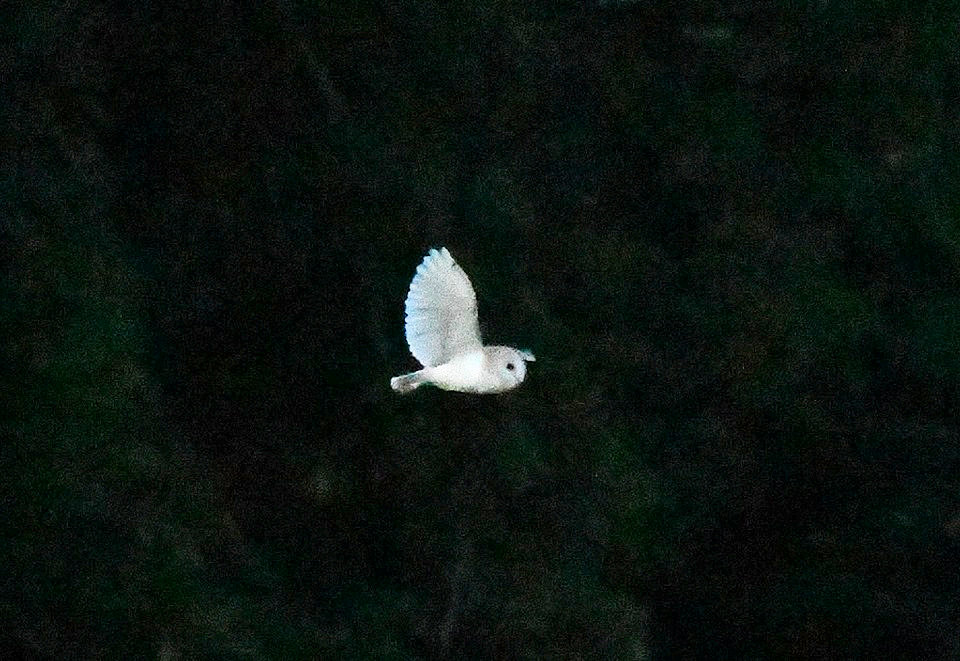
Barn Owl (courtesy Niall Hammond)
Pyramid Orchid (courtesy Cathy Block)
 Common Frog (courtesy Alan Dawson)
Small Heath (courtesy Alan Dawson)
 Mute Swan family (courtesy Alan Dawson)

Friday, 14 June 2019

Spotted a Spotted and another Spotted

Sunshine and showers, 16°, breezy SSW.

Spotted Flycatcher is almost another lost species to Cholsey. However it appears we may have a breeding pair in the village. The location is being withheld to prevent disturbance which is fair enough and this will be the first in approx. 5 years since they last bred in the village.

A flurry of Swift (20+) and House Martin (12+) over Lollingdon Hill today moving ahead of a rain shower that passed over and a few more Swift on the back end of the shower feeding over the hill.

Other sightings very much the same as Wednesday and mainly very static out there at the moment.

Evidence of an active Barn Owl out at Lollingdon as some fresh pellets found (per TW).

The Swallows breeding out at Lollingdon have 3 adults currently hunting for food. It is not unknown for young from the previous year to stay with the parents and help with rearing duties on the current brood. This may well be the case with these.

Mammals: Brown Hare.

Butterflies: 2 Small Tortoiseshell, 2 Speckled Wood and 3 Meadow Brown.

Small Tortoiseshell
Common Spotted Orchid growing in the garden.

Wednesday, 12 June 2019

Between the Rains

Overcast with rain on the way, 15°, light NNW.

After 2 days of rain I went out this morning and just got back before the rain started again.

2 Spotted Flycatcher found today, probably passage birds moving through (still some Spot Flys arriving on the south coast).

The “songscape” still dominated by Yellowhammer, Corn Bunting, Common Whitethroat, Chiffchaff and Blackcap and a single Willow Warbler, Reed Bunting and 2 Lesser Whitethroat (1 seen, 1 heard).

A Raven and a Little Owl out at Lollingdon and a Goldcrest singing in the brook meadow.

3 Lesser Blackback Gull associating with Corvids in the pig fields and a single Black-headed Gull flew over.

Mammals: Brown Hare.


Tuesday, 11 June 2019

The importance of Gardens

Gardens now make up 10 million acres of land in the UK more than all the nature reserves put together, roughly 15% of the UK land mass. With 27 million gardeners we can make a difference.


Our wildlife is in serious decline – let’s give it a helping hand, be sympathetic to wildlife.

Gardens are now a major refuge for wildlife if we manage them accordingly.

A lot of emphasis at this time in growing flowers for pollinators such as Bees and Butterflies. But how about plants and areas for their eggs and larvae to develop for without these there will be no Bees and Butterflies.

We tend to forget about ecology, the big picture! And we are not talking just insects here. We need to think about birds, mammals, reptiles, amphibians, invertebrates etc.

Plant native whenever possible, leave areas undisturbed, wild areas, areas for wintering insects, add a water feature, dead wood, the odd rock, diversify, as little or as much as possible depending on your garden size. If big enough try a wild flower meadow?

Put a hole in your fence (for Hedgehogs etc. to move through), put up nest boxes, Bug hotels, feed the birds.

Think about biological controls, Aphids? Encourage Ladybirds! Let nature do the work.

Consider not using poisons, pesticides, herbicides and slug pellets as these have a detrimental effect on the environment and your health.

Cut hedges outside of the breeding season, take caution in using strimmers (a lot of Hedgehogs killed or injured by these) and leave an area around the base of trees not strimmed. Consider Toads and Frogs wintering in compost bins when digging out.

Just be mindful!

Give it time to work, nature is great at balancing with your help.

For further info: Here

Once a gravel drive.....now (courtesy Mark Bradfield)
courtesy Julie Berk

Monday, 10 June 2019

Cholsey's lost birds

Whilst most of our bird species have declined by an average of 50%, some are now noticeably absent from Cholsey.

Declines are linked to changing farming practices, mechanised farming, pesticide and herbicide use, habitat loss, hunting on migration, disturbance and climate change.

We have over the years lost a few while some hang on by a thread. My records/information maybe incomplete so any further information welcomed.

Most notable of these are:

Corncrake: Decline started in the late 19th century with the advent of mechanised farming and subsequently loss of suitable habitat and subsequent pesticide use.

Spotted Crake: once common along riverside meadows and now absent. The last record being in 1957. Hunting in the 18th & 19th century along with other factors put paid to this species.

Northern Lapwing: One species hanging on by a thread but probably not for much longer. Back in the 1960’s I recall myself and Brian Wyatt collecting chicks for Bill Campbell (Cholsey School headmaster) to ring and then releasing them back where we found them in fields next to Bunk bridge along Church road.

A few still nest near the Bunk line but that area has been designated for gravel extraction so that habitat will be lost. They are still regular as winter visitors.

Common Snipe: once common on wet meadows and marsh land, their drumming courtship flight could be heard over Cholsey Marsh (1970’s & 1980’s) and the marsh land between Cholsey and Aston Tirrold (1960’s). Change in land use (drainage) and disturbance are some factors in its demise. Seen regular in small numbers now as a winter visitor.

European Nightjar: never common but a few pairs used to breed on Cholsey Downs back in the 1960’s. Changes in land use and disturbance have played a part in this species now being absent.

European Turtle Dove: again a regular summer visitor in Cholsey. You could hear its purring song on still summer days up until the 1970’s. The bird is so rare in Oxfordshire now that reports are now not publicised. I used to see flocks arriving in spring on the east coast and autumn gatherings as near as Dorchester of 100+ birds but alas no more!

Hunting around the Mediterranean region and intensive agriculture are 2 of the main reasons this species is in rapid decline throughout Europe.

Lesser-spotted Woodpecker: once a regular species in Cholsey into the 1980’s. There were 3 pairs I was aware of along my river walk back then plus several more around the village. According to the BTO, competition and predation by Great-spotted Woodpecker and the decline of small bore dead wood suitable for foraging are a few causes of its rapid decline. This species is in decline across Europe

Nightingale: An enigmatic species that was a regular summer visitor to Cholsey. Its decline was well underway by the turn of the 20th century with habitat loss and it never recovered.

Marsh Tit: once regularly encountered along the river near Winterbrook and Bow Bridge but yet again this species disappeared during the 1980’s. there have been records of one or two breeding pairs present in the 1990’s and apart from the odd sightings of individuals with Tit flocks recently no further records in Cholsey.

Red-backed Shrike: A scarce but regular breeder in Cholsey up to the 1960’s. I recall Bill Campbell showing me a breeding pair near Westfield road in 1963 and that was possibly the last sighting of this species in Cholsey. This species is now virtually extinct as a breeding species in the UK. Habitat loss and prey species decline has had a major effect on this species.

Tree Sparrow: another species that was once common in Cholsey with 10+ breeding pairs and good numbers wintering on farmland. Between the 1970’s and 1990’s The UK population then crashed by 93% and this was reflected in Cholsey with just a handful of records in the last 20 years.

Loss of hedgerows and planting of winter cereals contributed to its downfall.

Cirl Bunting: another regular species breeding in Cholsey up until the mid-1960’s.

One of the last pairs bred not 200 metres from where I now live and Tony Williams recalls seeing one close to his garden.

Back in the 1930’s it was a common species of lowland farmland and known as the “Village Bunting”. Changing farming practices, habitat loss and pesticide use has played a significant part in the disappearance of this species throughout the UK.

Remarkably the RSPB launched a conservation program for Cirl Buntings and a small self-sustaining population now exists in Devon and are rarely seen elsewhere.

Cirl Bunting (courtesy Tom Stevenson)
 Lesser-spotted Woodpecker
Turtle Dove

Saturday, 8 June 2019

Breezy day

Sunny with a moderate breeze, 16°, fresh SW.

A wet day yesterday and overnight but the rain sorely needed.

A visit of a Muntjac Deer racing around the garden yesterday. Too fast to get any decent pics, just managed a couple of it disappearing into undergrowth.

The Great-spotted Woodpecker family have been visiting regularly over the last few days with 2 parents and 2 young.


Wednesday, 5 June 2019

An unusual one!

Mainly cloudy, 17°, light SW.

An unusual record this morning of a singing Reed Warbler in the Millennium Wood and still singing in roughly the same spot when I came back this afternoon, 3.5 hours later. I wonder if this is an example of 1st summer bird on a practice run north?

I’ve had this discussion down at Portland Bird Observatory with the “Prof” and Martin in past years and here I quote from a blog entry by Martin from the 31st May this year.

“If ever there's a characteristic sound of the late spring at Portland it has to be the constant chuntering of a Reed Warbler; we have some ringing evidence to suggest that these late arrivals include a lot of the previous year's youngsters that are presumably making exploratory trips northward way after the main passage of breeding adults has finished. For whatever reason they always seem perfectly happy to sing all day in inappropriate habitat and it's an odd feature that they're often rooted to the same bush or tree they pitched up in: we didn't ever see/hear today's bird at the Obs leave one small clump of trees - it was singing there at dawn and it was still singing there when we left at the end of the afternoon”

Source: Martin Cade and Professor Pete Morgan.

Some activity over the hill today with approx. 100 Swift and c8 House Martin moving south. Local movement? Failed breeders moving south? Or something else?

2 Raven drifted high north over the hill, calling as they went.

Pied Wagtail feeding around the garden today and a Goldcrest singing late afternoon.

Mammals: Brown Hare, Roe Deer and Short-tailed Vole.

Reps: 1 Common Lizard.

Butterflies: Holly Blue, a single Red Admiral and several Speckled Wood.


Monday, 3 June 2019

Slow start to June

Sunny intervals, 18°, light SSW.

Relatively quiet out at Lollingdon again. A bonus of the first Curlew of the year heard and seen flying west from Kingstanding Hill area.

A Kestrel hunting on the hill and the usual birds present and 2 Lesser Whitethroat heard singing.

5 Stock Dove in the garden today!

Dragonflies: Banded Demoiselle and Azure Damselfly.

Butterflies: A few unidentified Whites, Brimstone, Orange Tip, Peacock and Speckled Wood.

 One of the many Common Whitethroat around.

 Mistle Thrush
Song Thrush, post bath!
Red & Black Froghopper (courtesy Alan Dawson)